A Guide to ADA Compliance and Commercial Lifts for Businesses
For many small business owners and property managers in the Bay Area, expanding into an older commercial space is an exciting milestone. However, that excitement can quickly turn into anxiety when faced with strict ADA (Americans with Disabilities Act) compliance laws, California building standards, and local fire codes.
Providing equal access for all customers and employees is not just a moral obligation. It is a strict legal requirement. Failing to provide adequate wheelchair accessibility can lead to severe fines, costly lawsuits, and delayed grand openings.
At Rollin’ Along, we specialize in helping local businesses retrofit older buildings. We help you navigate the complex regulations to ensure your space is welcoming, compliant, and open for business.
The Challenge of Older Commercial Buildings
California has some of the most rigorous accessibility standards in the country. If you are renovating a commercial space, opening a second-floor restaurant, or converting a historic building into a retail shop, you will likely need to provide an accessible route between levels.
The problem is that traditional commercial passenger elevators require a massive footprint. They necessitate a deep structural pit, an overhead machine room, and a budget that can quickly sink a small business. Many older buildings in cities like Oakland, San Francisco, or Berkeley simply do not have the physical space to accommodate a standard elevator shaft.
Cost-Effective Solutions: Platform Lifts and Low-Rise Elevators
Fortunately, ADA compliance does not always require a million-dollar renovation. There are highly effective, code-compliant alternatives designed specifically for low-rise commercial applications.
Commercial Vertical Platform Lifts (VPLs)
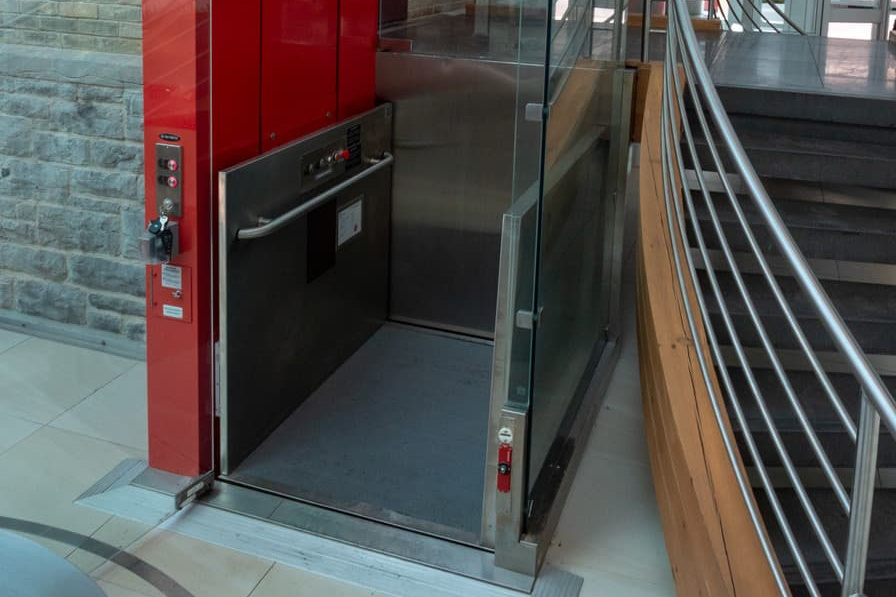
Also known as porch lifts, these systems act like mini elevators. They consist of a platform that moves vertically between floors. They are ideal for stages, mezzanines, or overcoming short flights of stairs where traditional ramps would be too long or steep to meet code.
- Benefits: VPLs require significantly less space than an elevator, rarely need a deep pit, and are vastly more affordable to install and maintain.
LULA Elevators (Limited Use / Limited Application)
If you need to move people between two or three floors, a LULA elevator is the perfect middle ground between a commercial wheelchair lift and a full-sized passenger elevator.
- Benefits: LULAs look and feel like standard elevators but require a fraction of the square footage and a much shallower pit, making them ideal for schools, churches, and small offices.
The Local Expertise You Need
Navigating ADA codes is only half the battle. You also have to satisfy local building inspectors and fire marshals. This is where partnering with a specialized local expert becomes critical.
Because we are a local company, we understand the specific nuances of regional building codes. We work directly with your architects and contractors to ensure the lift you choose meets every local requirement before the first tool is ever lifted.
Frequently Asked Questions About Commercial Accessibility
Do small businesses have to comply with ADA accessibility laws in California? Yes. Under both the federal ADA and the California Building Code (Title 24), commercial facilities and places of public accommodation must remove architectural barriers to ensure equal access for individuals with disabilities.
What is the difference between a LULA elevator and a standard commercial elevator? A standard commercial elevator is designed for heavy, continuous traffic and requires a large structural footprint. A LULA (Limited Use / Limited Application) elevator is designed for low-occupancy buildings. LULAs are smaller, travel at slower speeds, and require much less space and structural modification, making them perfect for retrofitting older commercial buildings.
Can I use a ramp instead of a commercial lift? Ramps are great for short elevations, but ADA guidelines dictate that for every inch of vertical rise, you need one foot of ramp length. For anything over a few steps, a commercial lift is often the only space-saving and code-compliant solution.
Get Your Business Compliant Today
Do not let accessibility challenges delay your business plans or put you at legal risk. If you are struggling to make your commercial space accessible, you need an expert on your side.
Contact Rollin’ Along today to schedule a free on-site commercial compliance evaluation. Let us help you find the perfect mobility solution to keep your business moving forward.